
skype:
skype:



When selecting industrial LCD screens or other products, many people encounter the question: why does the same screen display differently in different environments? The answer often lies in the contrast ratio parameter. Contrast ratio not only affects the image's depth and clarity but also directly determines how easily information is readable in complex lighting conditions. This article, using practical applications of TFT LCD screens, will guide you through understanding standard contrast ratio testing methods.
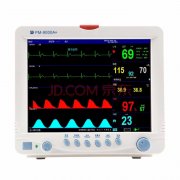
In applications such as medical equipment and security monitoring, color accuracy is crucial for user judgment. Many users report significant color differences for the same image on different screens, impacting work accuracy.
Solution:
Contrast ratio testing needs to consider both color saturation and grayscale response. Industrial TFT LCD screens typically ensure color consistency through ICC standard testing or color space calibration (such as sRGB/NTSC coverage). Insufficient contrast ratio results in a hazy, grayish appearance. Therefore, selecting a TFT LCD screen with a contrast ratio ≥1000:1 and support for a high color gamut effectively solves this problem.
Many business users have reported that screens with the same rated contrast ratio exhibit significant differences in actual viewing experience. This is actually related to the testing methods and environment.
Solutions:
Testing Environment: Testing should be conducted under standard lighting conditions (avoiding stray light interference).
Panel Technology: IPS/VA panels generally offer better viewing angles and contrast ratios than TN panels.
Application Matching: For example, in outdoor advertising display scenarios, it is recommended to choose TFT industrial LCD screens with high-brightness backlighting, high contrast ratios, and anti-reflective coatings.
A: Not necessarily. Excessively high contrast ratios can result in unnatural images in low light. A range of 800:1 to 1200:1 is generally more suitable for most industrial and commercial display applications.
A: Yes. Common testing equipment includes luminance meters or colorimeters. The standard contrast ratio is obtained by measuring brightness under both full black and full white conditions and then calculating the ratio.
A: They complement each other. High brightness ensures visibility in strong light, while high contrast ratio ensures clear details. Both are essential.
A: Some screens can have their contrast ratio adjusted through gamma correction and backlight adjustment via the driver board, but the screen's inherent contrast ratio is primarily determined by the panel manufacturing process.
Contrast ratio, as a crucial parameter for measuring the display quality of TFT LCD screens, directly impacts user experience and the application value of devices. Understanding these testing methods and application scenarios not only allows for better demonstration of product advantages but also enables more precise solutions to user pain points.
Hangzhou LEEHON Technology Co., Ltd., as a provider of LCD display driver solutions specializing in the industrial sector, has established deep partnerships with many leading global LCD panel manufacturers, including BOE, TIANMA, IVO, AUO, Innolux, and Kyocera, professionally supplying multi-brand, full-series industrial-grade LCD display products and customized solutions.
If you are interested in our industrial LCD screens or want to learn more about how to choose the most suitable brightness parameters based on your specific applications, we welcome you to contact us at any time. Our expert team will provide you with professional consultation and support to help you find the most suitable industrial display solution for your needs.
Please contact us through the following methods to start your journey to a customized solution:
Visit our official website: [www.lhlcdpanel.com]
Send an email to: [celia@leehon.com]
Call us at: [0086-15906639973]
We look forward to working with you to bring you greater value.